Stay Connected to What Matters Most
Getting around Central Florida is one of the region’s quiet advantages. With major highway access, high-speed regional rail, and one of the busiest airports in the country, residents stay connected close to home and ready to travel wherever life leads.
For anyone relocating to the Orlando area, understanding how the region moves makes settling in easier. Whether you are commuting between counties, catching a flight, or planning a weekend trip south, Central Florida is built to keep you moving.

Airports in the Orlando Area
Three airports serve Central Florida, each suited to a different kind of travel. Together they give residents flexible access to destinations across the country and around the world.
For anyone relocating to the area, that range matters. Whether you travel often for work, stay close to family in another state, or like the freedom of a spontaneous getaway, having three airports within easy reach keeps you connected without adding friction to the trip.
Orlando International Airport (MCO)
MCO is Central Florida’s primary airport and one of the busiest in the country, with nonstop service to hundreds of domestic and international destinations. Its central location keeps it convenient for residents across the metro area, with direct access to major highways along with rental, rideshare, and shuttle services.
The airport’s newest addition is Terminal C, which opened in September 2022 as part of a $2.8 billion expansion. It brought enhanced security, expanded international arrivals, upgraded baggage systems, and new dining and shopping, along with a direct connection to Brightline high-speed rail.
Orlando Sanford International Airport (SFB)
Located north of downtown, Orlando Sanford International Airport serves as a convenient alternative for travelers in Seminole, Volusia, and northern Orange counties. SFB is known for its smaller footprint, shorter lines, and easy parking, which makes it a favorite for quick trips and budget-friendly travel.
Home to several low-cost and leisure-focused airlines, SFB offers nonstop routes to select U.S. and international destinations. For many residents, it delivers a more relaxed travel experience while keeping essential air service close to home.
Orlando Executive Airport (ORL)
ORL is a centrally located general aviation airport just minutes from downtown Orlando. It primarily serves private, corporate, and charter flights, offering quick access to the city without the congestion of larger commercial airports. For business travelers and private pilots, ORL is a convenient option built around efficiency, flexibility, and proximity to Orlando’s urban core.
Getting Around by Car
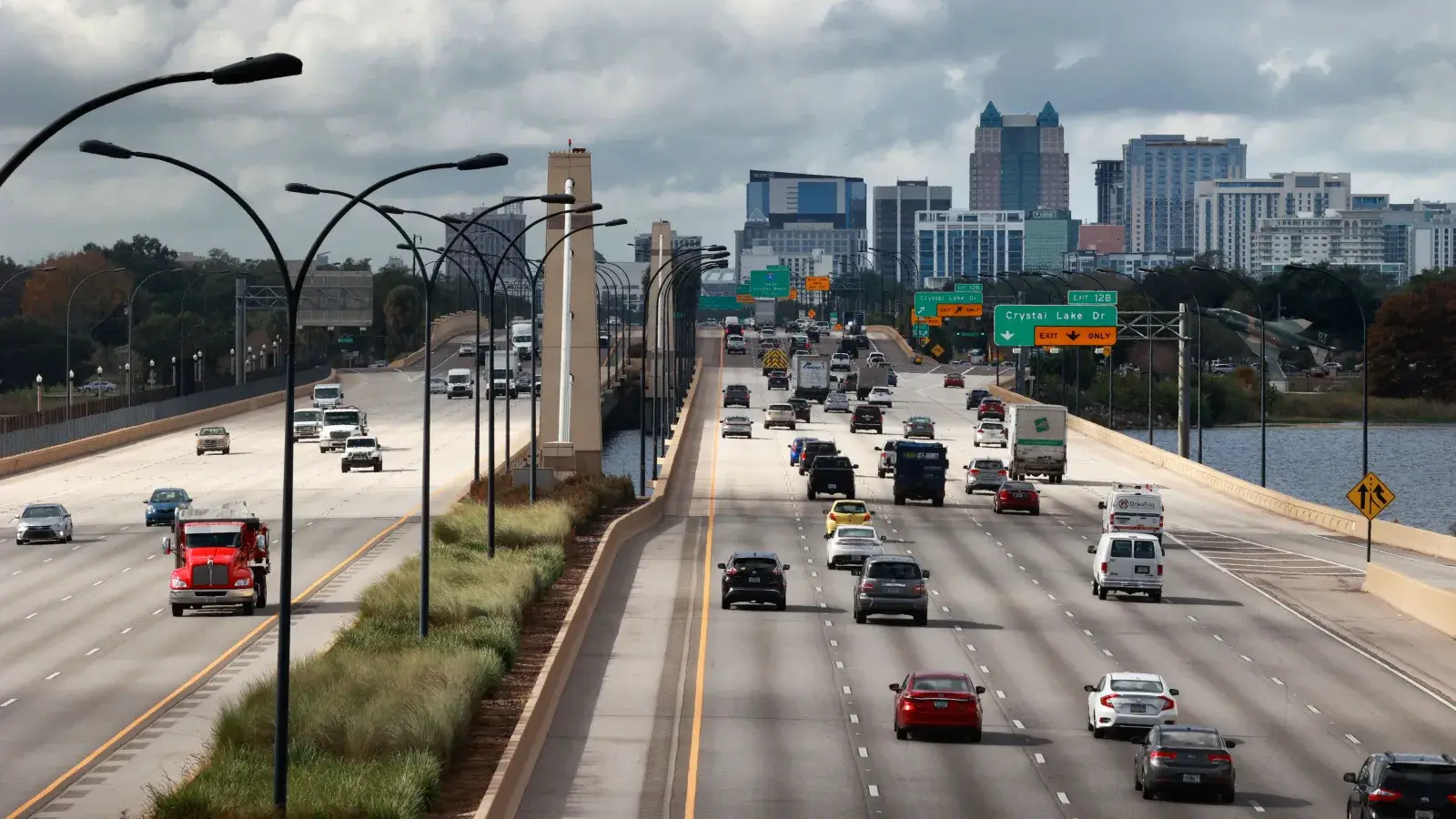
Central Florida offers strong regional connectivity, which makes daily life and statewide travel straightforward. Metro Orlando is anchored by Interstate 4 and Florida’s Turnpike, the primary north-south and east-west corridors through the region.
A network of additional highways, including U.S. 17-92, U.S. 27, U.S. 192, and U.S. 441, connects surrounding cities and suburbs alongside state roads and tollways. Much of this infrastructure is managed by the Florida Department of Transportation District Five and the Central Florida Expressway Authority, supporting one of the fastest-growing metro areas in the state.
The result is a well-developed system that gives residents flexible access across the region, whether the drive is a local commute or a trip somewhere farther out.
LIVE WHERE IT WORKS FOR YOU
One of the biggest benefits of living in Central Florida is the ability to select a location that is well connected to surrounding areas and supports both your work and lifestyle.
- Clermont
- Lake Mary & Sanford
- Lake Nona & Southeast Orlando
- Oviedo
- Winter Garden & Windermere
- Winter Park & Maitland
On the western edge of the region, Clermont connects to Orlando through Florida’s Turnpike, U.S. 27, and State Road 50. The commute is a straightforward highway drive for residents who trade a little distance for more space and a quieter pace.
One of the most connected corners of Central Florida, with both cities on I-4 and State Road 417. Each has a SunRail station for a weekday commute into Orlando, and Orlando Sanford International Airport sits nearby for quick, low-cost trips.
Hard to beat for frequent travelers. Lake Nona sits minutes from Orlando International Airport and the Brightline station, with State Road 417 and the 528 Beachline offering fast access to downtown, the airport, and the coast.
A quieter, residential feel with easy regional access. State Road 417 and State Road 434 connect Oviedo to East Orlando, UCF, and the wider expressway network, keeping cross-county commutes manageable.
Built for quick access without the surface-street traffic. State Road 429 and Florida’s Turnpike link these communities to the theme park corridor, downtown Orlando, and beyond, a popular draw for professionals settling into newer neighborhoods.
Central and close-in, with some of the shortest commutes in the region. Both connect easily to I-4 and U.S. 17-92, and each has a SunRail station into downtown Orlando, with Amtrak service available at Winter Park.

What Daily Driving Looks Like
Central Florida is built for regional movement. It is common to live in one community and work in another, and most residents rely on a car for daily travel. Expressways, toll roads, and beltways connect neighborhoods to major employment hubs, making cross-county commutes a normal part of the week.
Many drivers use SunPass for smoother travel and reduced toll rates. Parking is widely available across most areas, and rideshare services make airport runs and nights out simple. Seasonal afternoon rainstorms can affect drive times, so a little flexibility and planning go a long way.

Brightline High-Speed Rail
Central Florida is also connected to the rest of the state through Brightline, Florida’s high-speed rail service. Brightline links Orlando directly to South Florida, with stops in West Palm Beach, Fort Lauderdale, and Miami, offering a comfortable alternative to driving for longer trips.
The Orlando station sits right at Orlando International Airport, which makes weekend getaways and business travel easier and adds valuable statewide connectivity for residents.
For New Residents: Licenses and Vehicle Registration
If you are relocating to Central Florida, a few tasks belong near the top of your move-in checklist. Florida sets clear timelines for new residents, and handling them early keeps everything simple.
Florida Driver’s License
Florida requires new residents to obtain a Florida driver’s license within 30 days of establishing residency. Most drivers with a valid out-of-state license only need a vision test, though some may be asked to complete a written or driving exam.
Vehicle Registration
Vehicle registration must be completed within 10 days of starting work, enrolling a child in school, or establishing residency. You will need a Florida driver’s license, Florida-issued auto insurance, your out-of-state title, and a VIN verification. These services are handled through county tax collector offices, and requirements and appointments vary slightly by location.
Each county operates its own tax collector offices, so it is best to find the location closest to your new home.
Tips for Getting Around Central Florida:
- Set up SunPass early. A transponder or sticker saves money on tolls and keeps you moving. Toll roads are part of daily life here.
- Factor in afternoon rain. Summer storms roll through most afternoons. Build a little buffer into commutes and airport runs.
- Match your commute to your community. Where you live shapes your daily drive. Consider proximity to I-4, SR-417, SR-429, and your workplace before choosing an area.
- Know your airport options. MCO for the widest range of flights, SFB for quick low-cost trips, and ORL for private or business travel.
- Handle your license and registration first. Florida’s 30-day and 10-day windows come up quickly. Booking your county tax collector appointment early saves stress.
Frequently Asked Questions (FAQs) About Transportation in Central Florida
How many airports serve the Orlando area?
Three. Orlando International Airport (MCO) handles the widest range of domestic and international flights, Orlando Sanford International Airport (SFB) offers low-cost and leisure routes with shorter lines, and Orlando Executive Airport (ORL) serves private, corporate, and charter travel near downtown.
Which Orlando airport should I fly into?
MCO is the best fit for most travelers thanks to its size and route options. SFB can be more convenient and budget-friendly for residents in Seminole, Volusia, and northern Orange counties, especially for quick trips.
Do I need a Florida driver's license when I move to Orlando?
Yes. Florida requires new residents to obtain a Florida driver’s license within 30 days of establishing residency. Most people with a valid out-of-state license only need a vision test.
How long do I have to register my car in Florida?
Vehicle registration must be completed within 10 days of starting work, enrolling a child in school, or establishing residency. You will need your Florida license, Florida auto insurance, your out-of-state title, and a VIN verification, all handled through your county tax collector office.
Does Brightline connect Orlando to Miami?
Yes. Brightline links Orlando to South Florida with stops in West Palm Beach, Fort Lauderdale, and Miami. The Orlando station is located at Orlando International Airport, making it easy to reach.
What is SunPass, and do I need it?
SunPass is Florida’s prepaid toll program. It is not required, but most Central Florida drivers use it for smoother travel and reduced toll rates, since toll roads are common throughout the region.
Can you get around Central Florida without a car?
Most residents rely on a car for daily life, since the region is spread across multiple counties and communities. Rideshare services, Brightline, and airport shuttles help fill the gaps, but a vehicle remains the most practical option for everyday travel.